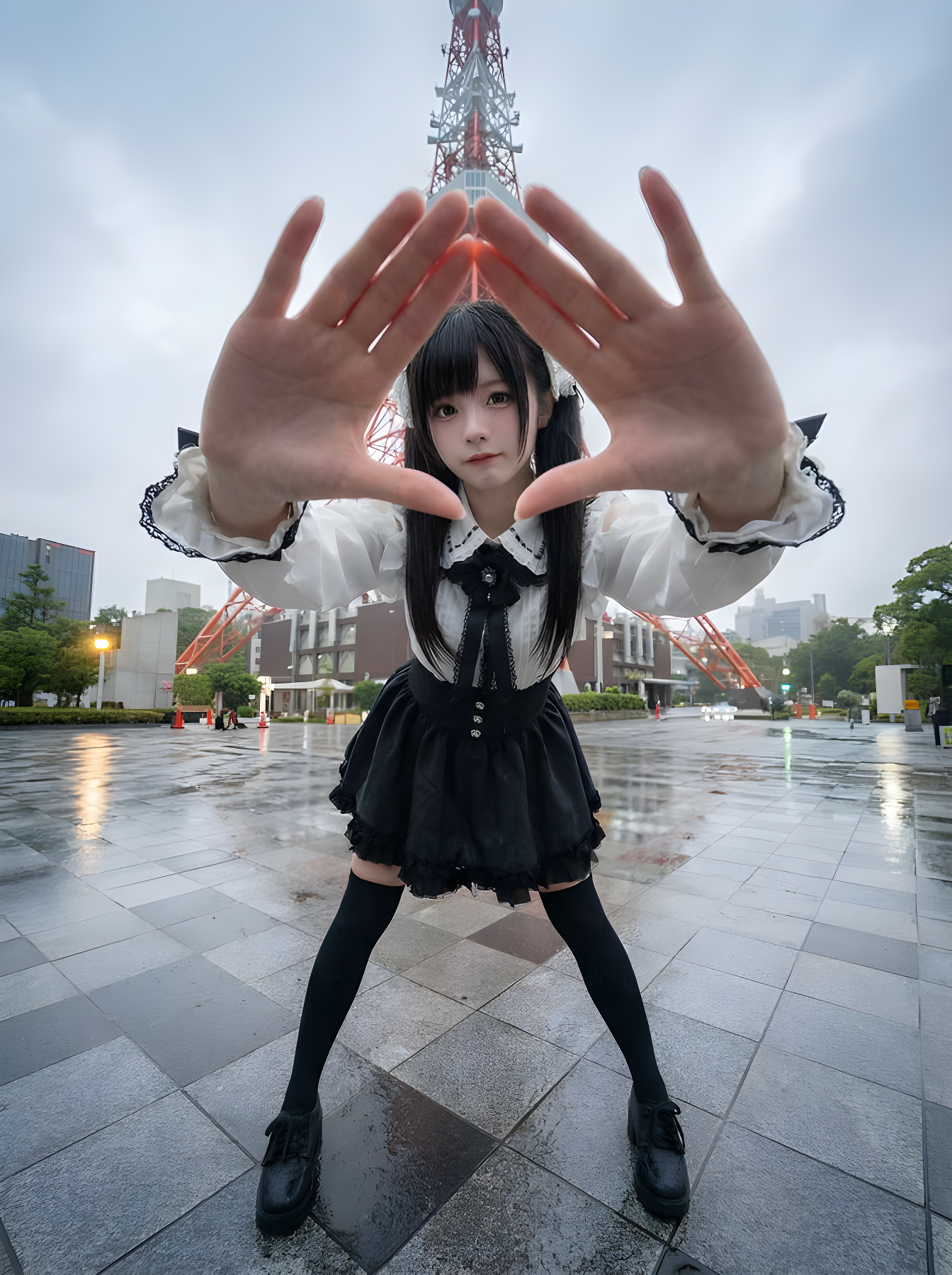
Generate Nine-Grid of Character Poses
Prompt
CopyAt the location of "Tokyo Tower", create an image based on the current local atmosphere and real-time weather. Have the specified character visit the location, integrating them into the scene. Generate the scene: Generate a vertical 3:4 aspect ratio image with a fixed nine-grid layout, three rows and three columns, each grid as an independent shot. Camera and perspective: – Use an ultra-wide-angle or fisheye lens (approximately equivalent to a full-frame 12–18mm feel) – The camera angle must differ significantly from the original image; exaggerated camera positions that can be used include: • Low-angle shot looking upward from directly below • High-angle shot looking downward from directly above • Ultra-low camera position close to the ground • High camera position looking down from above • Tilted "Dutch angle" composition – Always create a strong foreshortening effect: body parts closest to the lens appear huge, while the rest of the body extends into the distance in perspective – The final effect must resemble a bold fashion or street photography shot, completely realistic, not illustrative or anime-style Body parts close to the lens (1–2, sometimes 3): – In each edited image, select one or two main body parts to be extremely close to the lens (in more complex poses, sometimes three) – Vary these body parts across different images; avoid always having the same part close to the lens – Body parts that can be close to the lens include: • One or both hands/fingers reaching toward the lens • One or both feet/shoes/boots close to the lens • Knees or thighs • Face very close to the lens • Shoulders or chest leaning forward toward the lens – The selected body parts should be extremely close to the lens, almost touching it, with clear visibility of skin texture, fabric texture, and realistic wide-angle distortion Pose and overall body (complex and varied): – Create strong, cool, dynamic poses that match the extreme perspective – Randomly use different types of poses, including: • Standing poses with one leg or one hand extended toward the lens • Squatting or crouching close to the ground • Sitting on the ground or on an object • Lying flat on the ground with legs or feet toward the lens • Leaning the body significantly forward toward the lens • Twisting the torso, crossing the legs, or arching the back to create more dynamic body lines – Allow the use of complex poses, such as: • Both hands close to the lens, making gestures (peace sign, triangle shape, framing with fingers, pointing at the viewer, etc.) • Both feet facing the lens • One hand and one foot simultaneously serving as large foreground elements • Face close to the lens while hands or feet also appear in perspective – Maintain plausible and credible human anatomy even under extreme foreshortening Camera position and attitude (randomized): – Randomly change the camera angle and direction (upward, downward, sideways, tilted composition) while keeping the composition visually balanced and impactful – Maintain a cool, composed, confident attitude, leaning toward fashion magazine or street style, based on the original outfit’s vibe – Facial expressions can vary (serious, playful, confident, mysterious, etc.), but they must always look like the same person Lighting and rendering: – Maintain realistic shadows and contact with the ground/floor – High resolution and clear details, with visible skin texture, fabric texture, and material highlights Variation and randomness: – Each small image should be distinctly different from the others, maintaining diversity in the following aspects: • Camera angle • Pose type • Which body parts are closest to the lens • Composition direction (frontal, tilted, overhead, low-angle, etc.) – Avoid repeatedly using the exact same "one foot close to the lens" composition; present a rich variety of dynamic poses and camera position changes Strict rules: – Do not replace the character with someone else – Do not change the type of clothing; only alter the presentation through poses, perspective, and natural movement of the garments – Do not move the scene to a location outside the specified latitude and longitude; always stay within a reasonable extension of the specified location – Do not add text, logos, watermarks, or graphic design elements – Do not change to oil painting, illustration, or anime style; must maintain photorealistic effects
Tags
qisi_ai
@qisi_ai